
Now And Then
“Yesterday” is such an important song in the story of the Beatles that it’s tempting to try to shake it off, diminish it, if only to see if some fresh perspective comes along with lowering its place. Sergeant Pepper’s Lonely Hearts Club Band, the album, too, has often been the victim of this contrarian impulse. Both were public targets for John Lennon. Perhaps it’s painful not to get to control what the world loves the most, or, as many suggest, he was jealous that these creative peaks had Paul in the alpha spot.
But, at risk of being obvious, I’d argue that “Yesterday” and Pepper were as much a win for the Beatles as for McCartney. To say nothing of “Yesterday” musically, it was the beginning of greater autonomy within the group. It was the revelation that all four Beatles were always fully there, even when they weren’t all playing. Everything they did together after, Pepper included, takes advantage of this freakish balance: the greater they diverged, the more perfectly they seemed to lock together.
But I get it. After the group broke up, John and Yoko would be at a restaurant together and a violin player would come up to the table playing… “Yesterday.” Paul’s song.
Yoko gave Paul a couple cassettes in 1994. These were the tapes with “Free As A Bird,” “Real Love,” and “Now And Then” (plus “Grow Old With Me”). Apparently the one with “Now And Then” had “For Paul” written on it, (possibly) in John’s own handwriting. We rarely know precisely when John and Paul are singing to each other, during the Beatles or after, and a lot of the time they probably didn’t know either. But this song is almost certainly about and for Paul, sung directly to him.
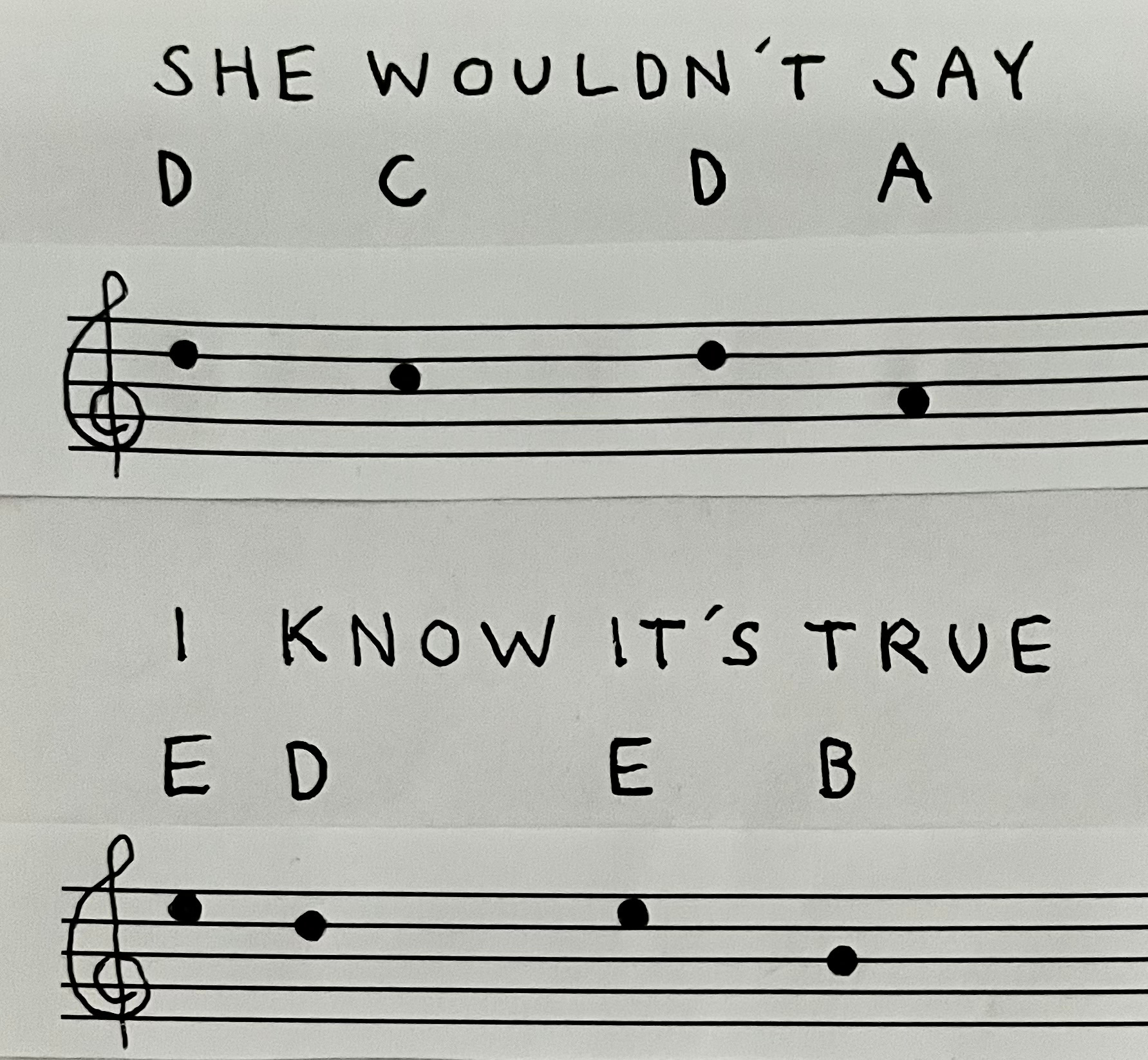
The opening melody of “Now And Then” uses the pentatonic fragment, with almost identical rhythm, that ends the first half of the bridge to “Yesterday.” If “Now And Then” is an olive branch for Paul, John starting his melody with a quotation from “Yesterday,” whether it was conscious or not, is pretty perfect.
At first the fragment appears to be a whole-step up from the source, but then consider: when John Lennon played “Yesterday” on the 1966 tour, it was in G, not F. In fact, Paul had always played it in G, but he’d tuned his guitar down a whole-step when recording it in 1965, probably to make the high notes easier to sing (though the lower tuning also adds depth to the lone acoustic guitar the arrangement is built on). On the ‘66 tour, it was apparently deemed impractical for George and John (who were both pretty much playing Paul’s original guitar part on electrics (with Paul on bass)) to retune or switch guitars, so Paul just strained a little for the higher key. But to John, “Yesterday” was in G, and if you take that into account, then “Now And Then” borrows exactly the “Yesterday” notes, untransposed.
(For more on Beatles ideas often staying associated with their original key, see Walter Everett’s two-volume The Beatles as Musicians. There’s a lot of “untransposed’ in those books, when comparing one song to another. It’s possible they just weren’t very adept at transposition, but whatever the reason—technical limitation and genius can be hard to distinguish!—it makes each Beatles key a real place, not wholly interchangeable, with its own little garden of options for the composers to consider.)
Lennon plays with this same fragment in the opening melody to “A Day In The Life,” the same three notes as “Now And Then” and the higher “Yesterday.” It thickens the references “Now And Then” is making, obviously, but this is interesting too: it means the song possibly most associated (besides “Why Don’t We Do It In The Road?”) with a fissure in the Lennon-McCartney partnership, “Yesterday,” and the song considered their greatest collaboration, “A Day In The Life,” both share this melodic motif.
“Now And Then” also shares the ascending melodic 5th from E to B with “A Day In The Life”: both provide the first terminus for their respective verses.
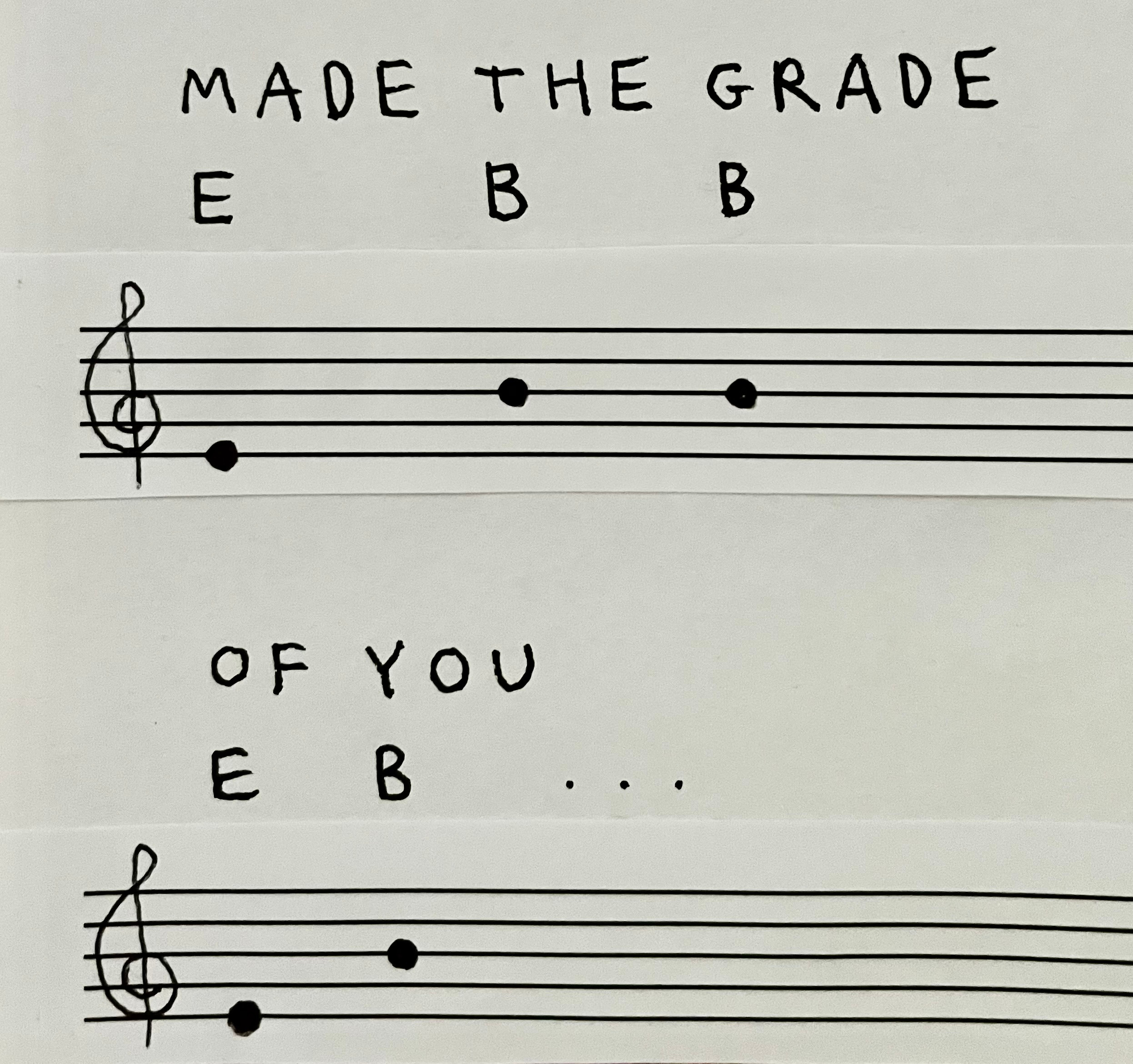
In “A Day In The Life,” Lennon, on guitar, absorbs the tension, the leapt-to B, into what would be an Am, a ii chord, changing it to an Asus2, and lets it hang. (Paul coyly refers to the missing C though, crushing it against the B in a quick piano figure.) In the original demo of “Now And Then,” John, on piano now, absorbs the B into the Am, here a i chord, but leaves the C in, playing Paul’s “A Day In The Life” minor 2nd, before, after a measure, the melodic B resolves—first up with a little figure, later down—pulling the piano along with it to a pure minor triad. (The B, though against essentially the same chord, is already resolved in “A Day In The Life” in a sense, being the 3rd in the overall key. The B in “Now And Then” is doubly a 2: over the chord and in the key, and John chooses to resolve it to a chord tone in the home triad (two different ways).) In the Beatles version, Paul, having replaced John’s piano, integrates the tension, but into a less-tense Asus2/4, replacing John’s C with a D (an idea which you can hear Lennon stumble on momentarily towards the end of his demo), before resolving to the Am triad with the melody. This little conversation about how to harmonize that note, stretched across decades, is getting very close to coming all the way around to where it started!
There is a fundamental uncanniness in having so much identical material functioning in two different keys: G in 1967, A minor in 1979/2023. Like the “Yesterday” quotation though—where a melodic alignment also doesn’t equal an alignment of key—once you hear the echo, the echo stays with you.
(Before finding another in “Now And Then,” I’d already been fixated on the importance of ascending melodic 5ths in the Beatles. Likewise on the importance of melodic Bs and various B chords—there’s a very interesting B7 in the original demo of “Now And Then”—as easter egg “Beatles” signatures. More on both another time.)
All this to say, whether or not it was John who wrote “For Paul” on that tape, it is fitting that “Now And Then” finally ended up a Beatles song. It always was.