
CW9
At the end of CW7, G half-whole minus G major (#4) equals Bb Open Darkness, and C lydian minus C major (#4) equals the pitches D, A, and B.
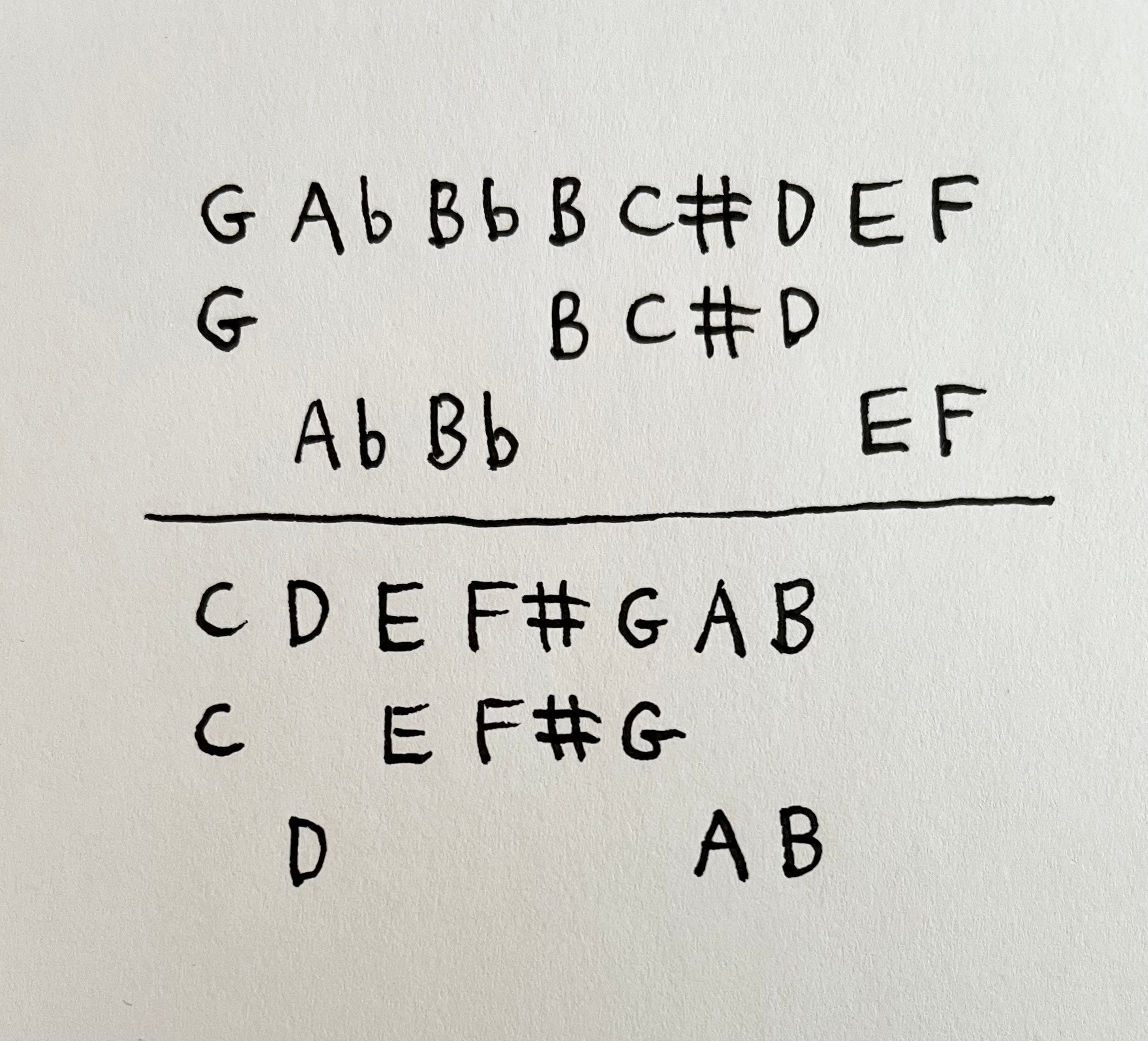
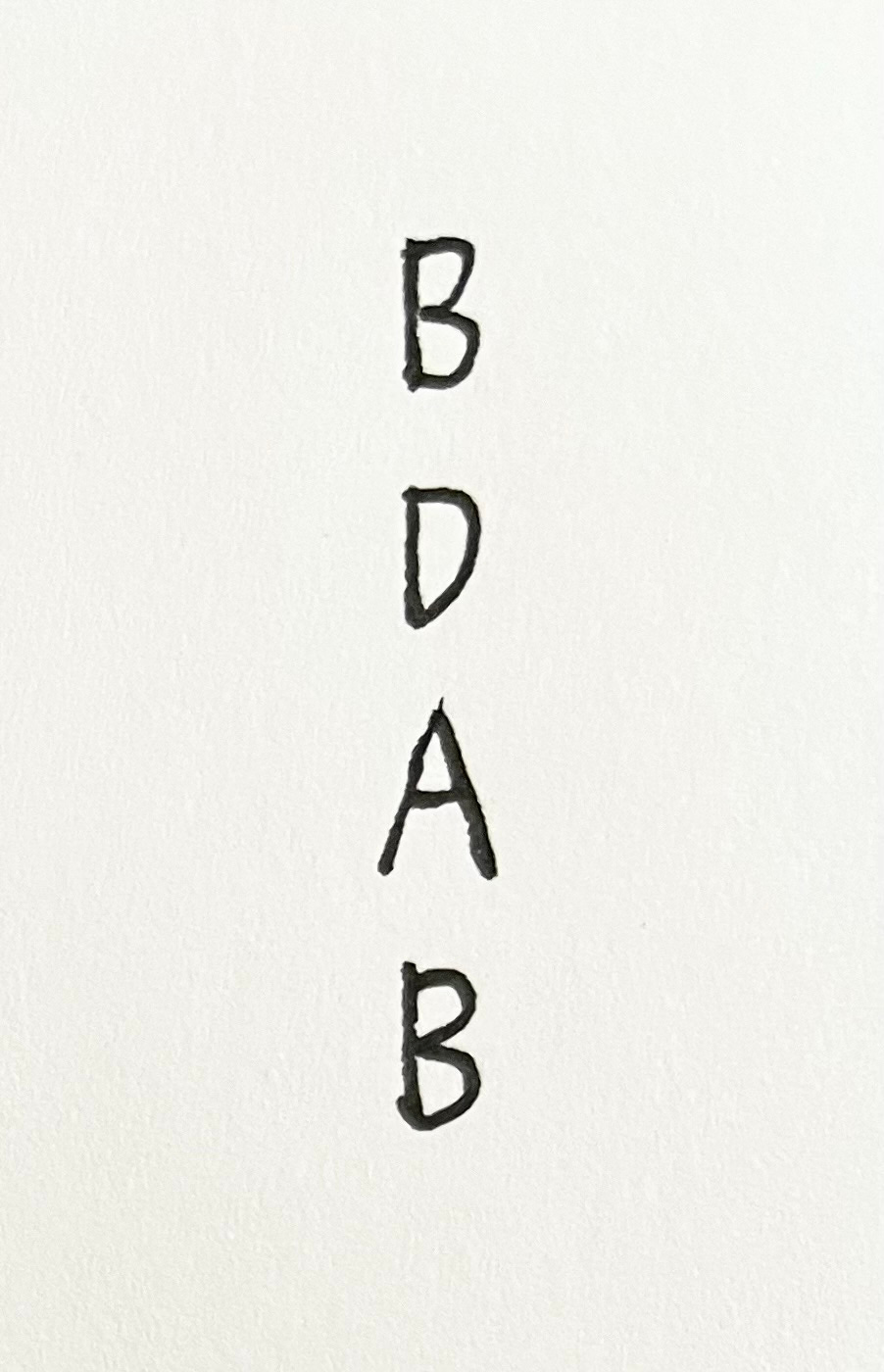
Composing the music for last week, CW8, I realized that D, A, and B could be organized into a Bm7 (no SO, but the ear fills it in).
And that Bb Open Darkness contained the leading tones of the F#7 that would typically lead there.
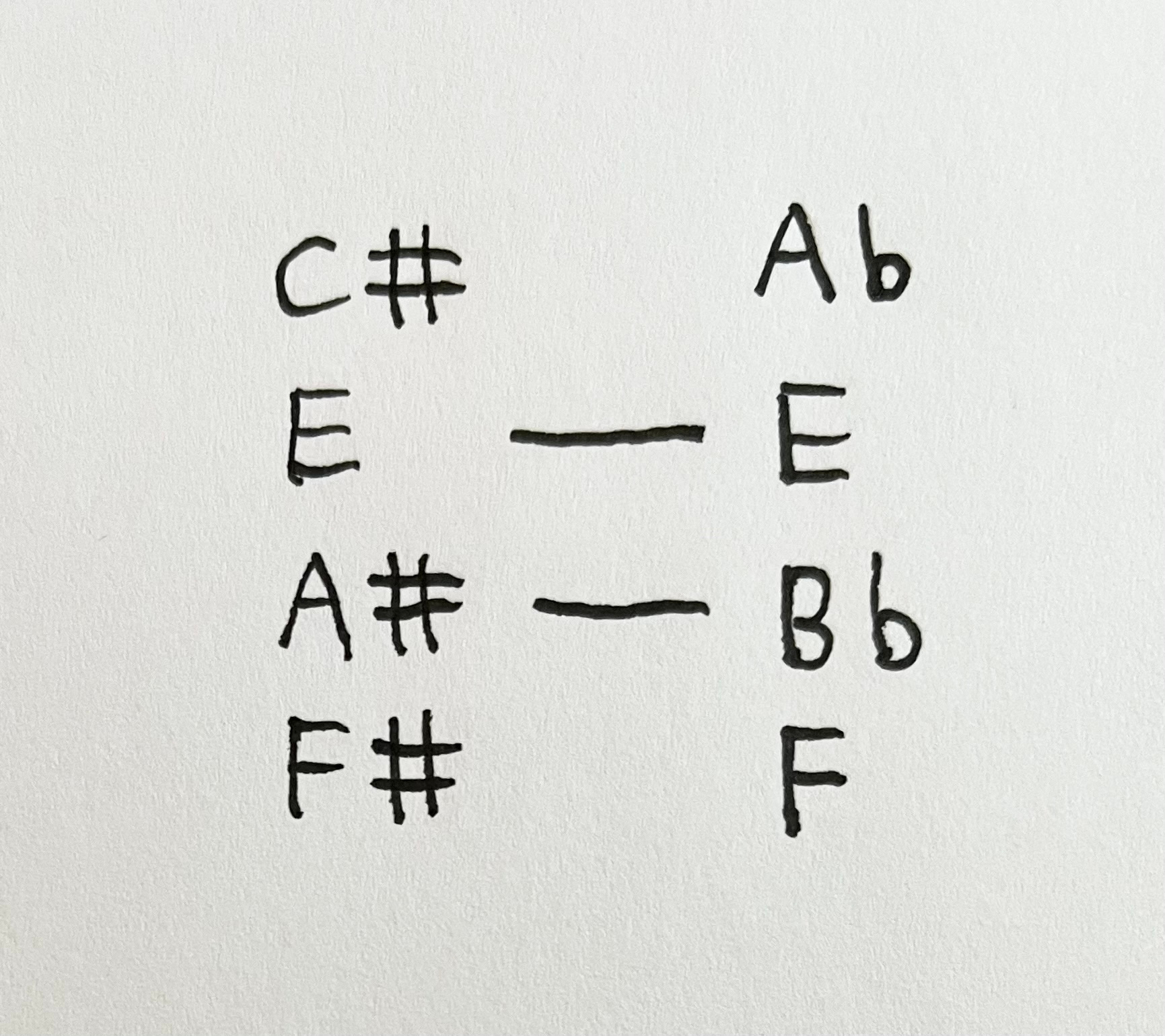
So I could use Bb Open Darkness as a corrupted F#7, leading to Bm7.
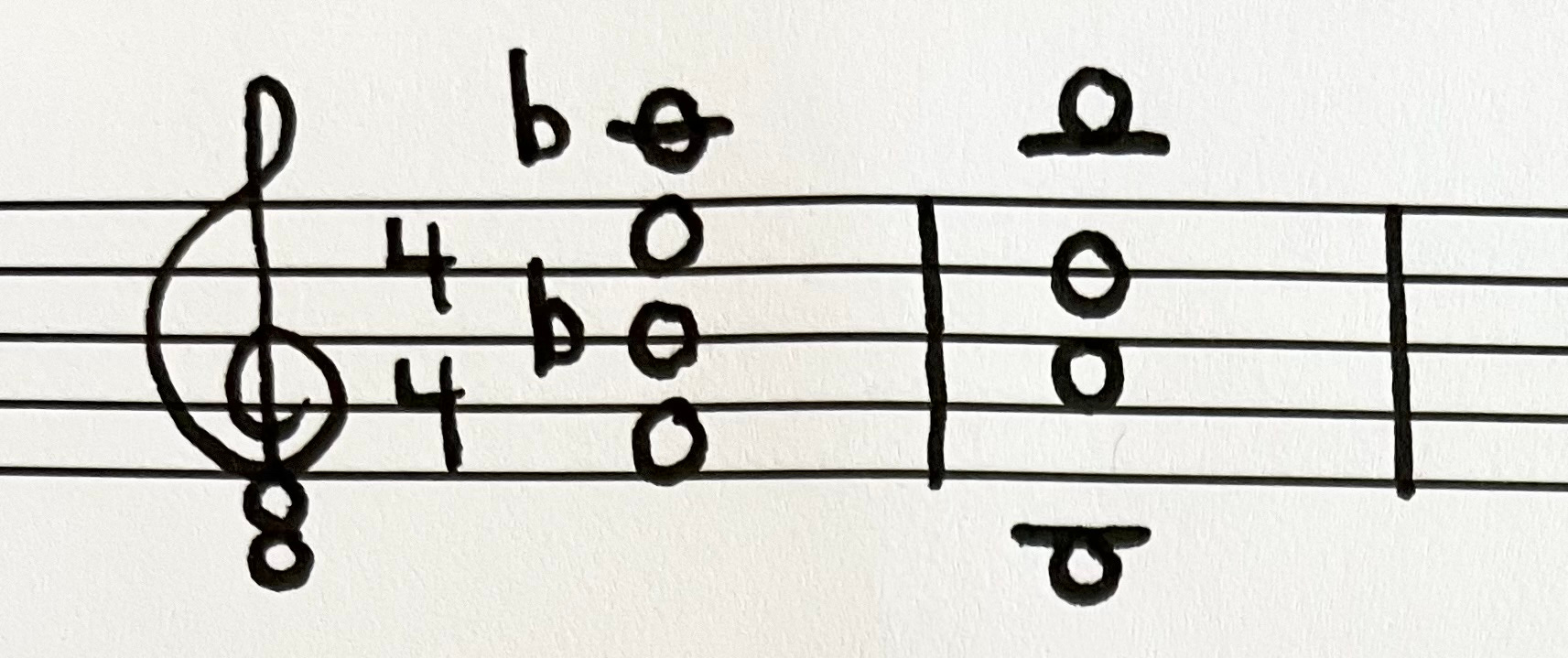
And then use the rest of G half-whole and C lydian as another cadence.
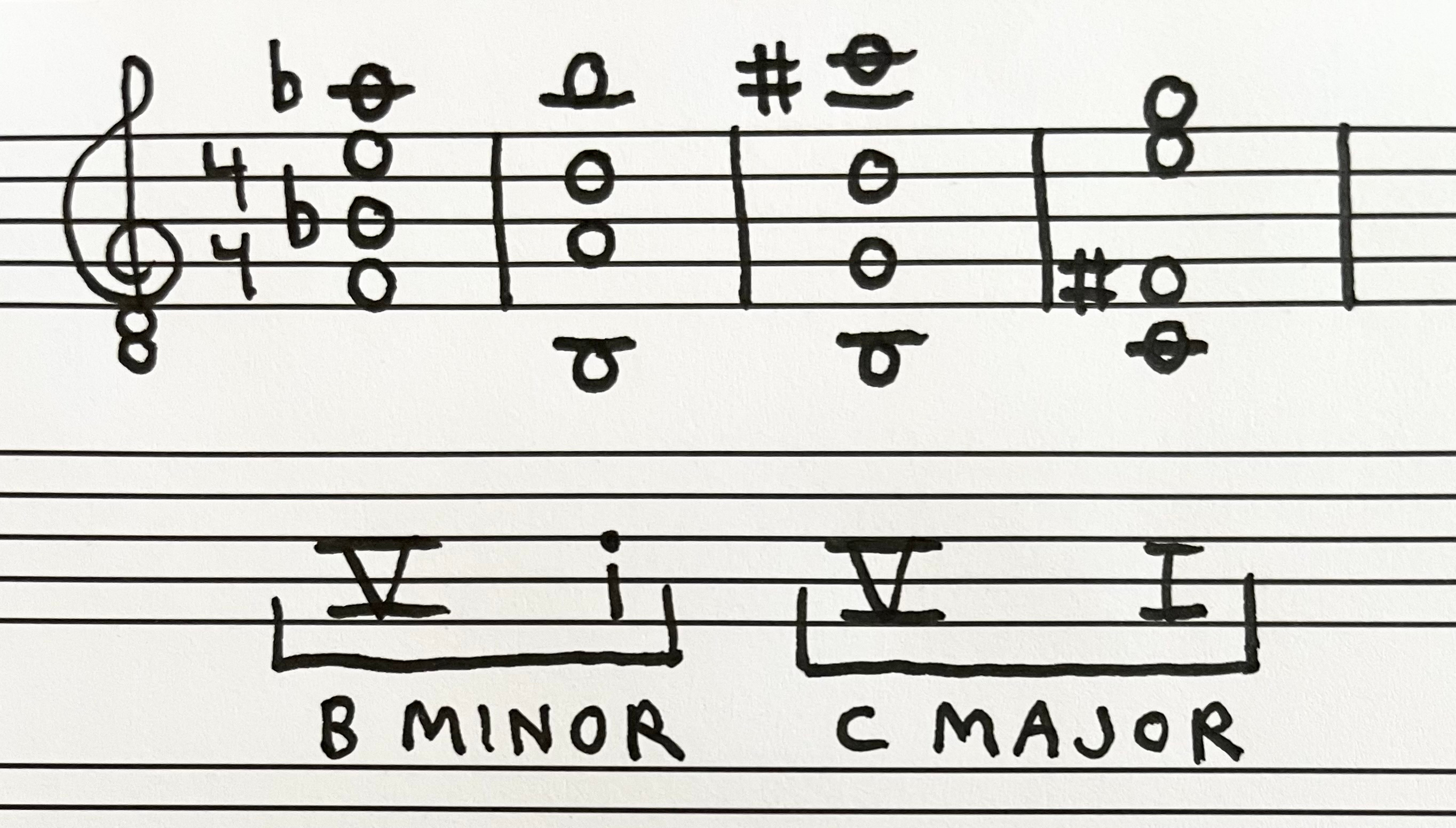
Then I used the top voice of the final chord as a pivot, and repeated the entire progression down a half-step. Note that it now begins in B minor and ends in B major.
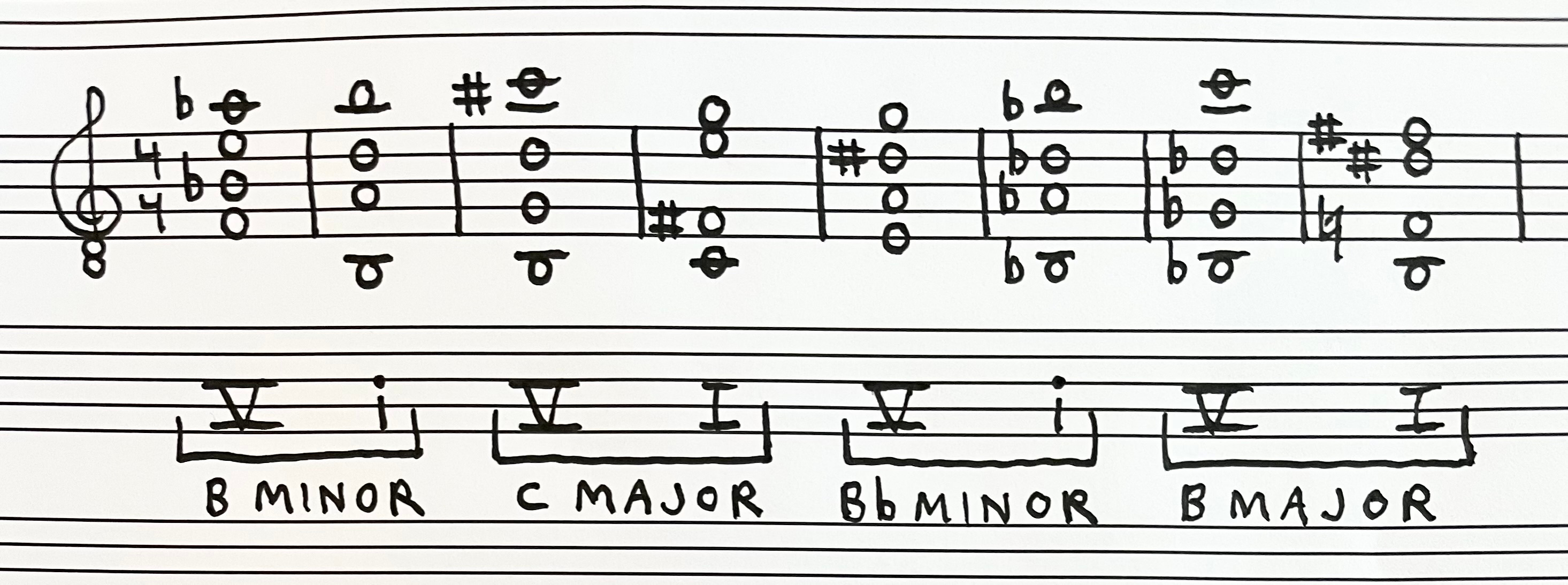
I am not alone in emphasizing the importance of the top voice of a chord progression. Like a mountain range, the shape of the upper edge gives the progression a great deal of its identity. I worked out how to “tie the room together” by giving that upper limit an added integrity. On top of six out of our eight chords being AITs, I also had the top voice sing out two melodic AITs, which I emphasized by chiming the high notes like a bell.
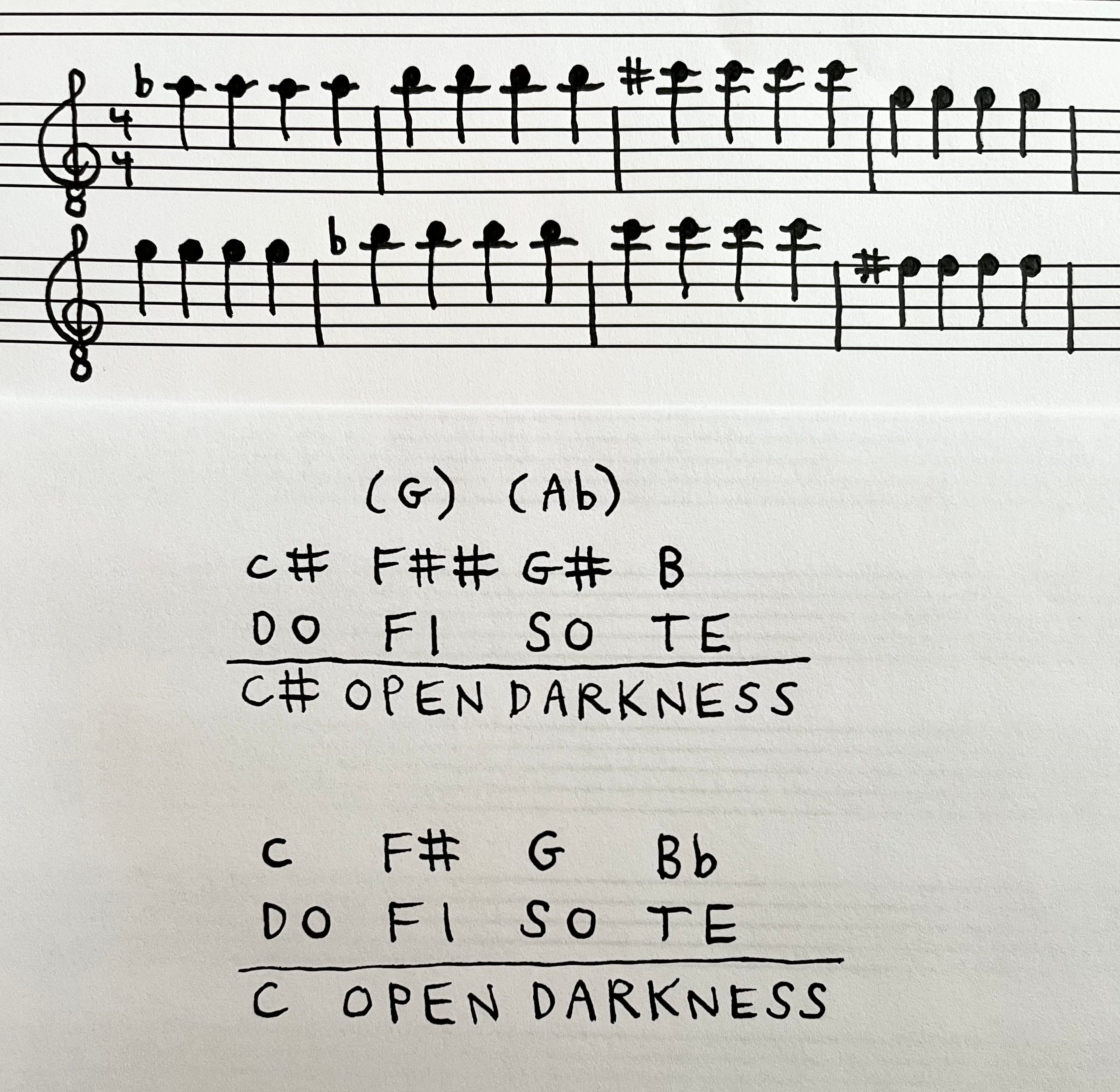
So all of this was more or less contrived, designed, albeit using materials I just bumped into in the midst of something else. But what intrigues me when spinning the wheel of this pseudo-“Vexations” is my experience of the Bbm7 chord. Why does this chord stand out to my ear as the deep resolution of the whole thing? I would’ve thought the B major (#4) in the final bar—our original key now shining Picardy like a yellow sun—was the big moment. Why is the Bbm7 in bar six the answer to the riddle?
Next time.